Chicken and Cabbage Recipes: The Skillet Searing Method
Chicken and cabbage skillet meals are fast and cheap, but they easily turn soggy. Here is the trick to searing chicken and crisp-cooking cabbage in a single pan.
Why chicken and cabbage works
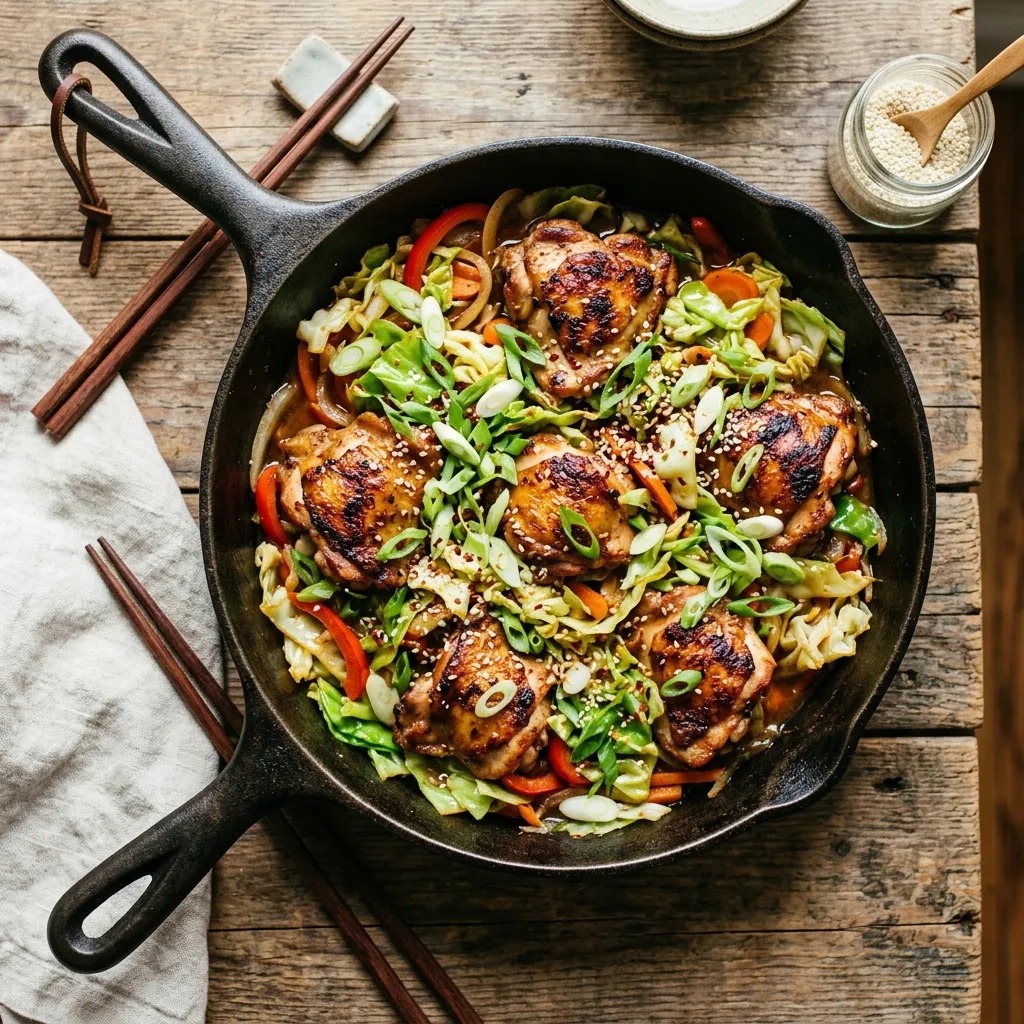
There are hundreds of chicken and cabbage recipes online, and for good reason: cabbage is one of the most budget-friendly, long-lasting vegetables in the produce aisle, and chicken is a reliable source of protein. A whole head of green cabbage typically costs under $2.00, and a pound of bone-in chicken thighs runs about $2.50 to $3.50. When you combine them, you get a meal that is cheap, fast, and remarkably filling. However, most people end up with a grey, watery mess because they do not understand how cabbage behaves in a hot skillet.
Cabbage has a water content of roughly 92 percent. That is a massive amount of liquid locked inside a leaf. If you dump raw chicken and cabbage into a pan together, the cabbage will release all its water before the chicken has a chance to sear. The chicken boils, the cabbage turns mushy, and you lose all the texture that makes this combination great. The trick is to separate the cooking phases: sear the chicken first, remove it, cook the cabbage in the rendered chicken fat, and combine them right at the end.
When cooked properly, cabbage does not taste bland. It develops caramelized, sweet edges that contrast beautifully with the savory, salty seared chicken. Searing chicken thighs in a skillet renders their fat, which serves as the ultimate cooking medium for the cabbage. By using the natural fat from the meat, you build a layer of flavor that store-bought oils cannot match.
The soggy cabbage mistake (and how to fix it)
The primary error in most skillet recipes is crowding. If you crowd shredded cabbage into a medium skillet, the water steam has nowhere to escape. It hits the sides of the pan, condenses, and runs back down, boiling the vegetable instead of sautéing it. You want the water to evaporate the second it leaves the cabbage leaves. This requires high heat, a wide skillet, and cooking in a thin layer.
To avoid soggy cabbage, you must also control the salt. Salt pulls moisture out of vegetables. If you salt the cabbage the moment it hits the pan, it will sweat instantly, dumping water into the skillet. Instead, cook the cabbage dry on high heat to get some color first, and only season it with kosher salt and soy sauce in the final minute of cooking. This keeps the cabbage crisp-tender rather than soft and limp.
Finally, timing is everything. Cabbage needs less time in the pan than you think. Five to six minutes of active tossed cooking on high heat is plenty. It should still have a noticeable bite when you pull it off the burner. If it looks translucent and limp, it is overcooked. Remember that food continues to cook from residual heat after you remove it from the skillet. Pull it off the heat when it is slightly underdone, and it will be perfect by the time it reaches the table.
Choosing and prepping the chicken
Chicken thighs are the best option for skillet cooking. They have a higher fat content than chicken breasts, meaning they are less likely to dry out if you leave them in the pan a minute too long. If you must use chicken breast, you need to slice it thin and cook it even faster to prevent a chalky texture. (For more details on prepping thin cuts, see our guide on thin sliced chicken breast recipes).
I spent years buying pre-marinated chicken from the grocery store deli section because I assumed seasoning was complicated. One day, salt, pepper, and olive oil on a plain chicken thigh outperformed every pre-made marinade I had ever bought. It cost roughly $0.10 in seasonings versus $3-$4 in markup. Marinades add surface moisture, which makes browning difficult. If you want a good sear, keep the chicken dry, rub it with oil, and season it with kosher salt and black pepper just before it goes into the hot skillet. If you want even juicier meat, you can prep it ahead of time using our chicken brine recipe.
Before you slice the chicken into bite-sized pieces, pat it dry with paper towels. Searing damp chicken guarantees a steam instead of a crust. Once dry, cut the chicken thighs into uniform chunks of about one inch. This ensures they cook at the same rate, allowing you to get them out of the pan before the smaller pieces overcook.
How to shred cabbage for the skillet
To get a uniform cook, you need to cut the cabbage evenly. Do not just chop it randomly. Start by removing any damaged outer leaves, then cut the head of cabbage into quarters through the stem. Use a sharp chef's knife to cut the core out of each quarter at an angle. The core is tough and bitter, so discard it.
Place one quarter flat-side down on your cutting board. Slice it crosswise into thin ribbons, about a quarter-inch wide. Slicing too thin (like for coleslaw) makes the cabbage turn to mush in a hot pan. Slicing too thick means it will take too long to cook, and the ribs will remain raw and tough. A medium shred is the sweet spot.
If you are short on time, a pre-bagged coleslaw mix from the grocery store is a fine shortcut. It contains shredded green cabbage, red cabbage, and carrots. However, be aware that pre-cut cabbage dries out on the edges and loses some of its sweet flavor. Slicing a fresh head of cabbage takes under three minutes and yields a much better result. If you have extra cabbage left over, it holds up in the crisper drawer for up to two weeks, making it one of the most forgiving ingredients in the fridge.
Equipment: why a cheap pan beats high-end cookware
You do not need expensive equipment to cook well. A $30 cast iron skillet, a $15 sheet pan, and a $10 instant-read thermometer will outperform $500 worth of specialty cookware. I have tested this. The $70 steak on the cheap pan story proves it from the other direction. A cast iron skillet costs $25-$40 and lasts decades. A non-stick pan costs the same and lasts 2-3 years. The skillet or cabbage does not know how much you spent on the cookware, but it does know how well the pan holds heat.
For this recipe, cast iron is the move. Cabbage is cold and wet; when you drop a pile of it into a thin aluminum pan, the temperature drops instantly. Cast iron is thick and heavy, meaning it retains its heat even when loaded with cold vegetables. This heat retention is what evaporates the cabbage water immediately, allowing the leaves to brown instead of steam.
If you do not have a cast iron skillet, a carbon steel wok is a good alternative. It allows you to toss the ingredients quickly over high heat. Avoid thin non-stick pans. You cannot get them hot enough to sear meat safely, and the thin metal cannot recover its temperature fast enough to prevent soggy cabbage. A well-seasoned 12-inch cast iron skillet gives you the surface area and heat retention needed for a perfect sear.
The step-by-step skillet method
Start by preheating your 12-inch cast iron skillet on high for 5 minutes. The pan must be hot. Add a tablespoon of a high-smoke-point oil like canola or avocado oil. Do not use olive oil here; it will burn and turn bitter at these temperatures. Season your chicken thigh pieces with kosher salt and pepper, then drop them into the skillet in a single layer. Work in two batches if your pan is not large enough to keep the chicken from touching.
Sear the chicken without moving it for 3 minutes to build a golden crust. Flip the pieces and cook for another 2-3 minutes until they reach an internal temperature of 165°F / 74°C. Remove the chicken to a clean plate. You will notice a layer of browned bits stuck to the bottom of the pan—this is fond, and it is packed with flavor.
Turn the heat down to medium-high. Immediately add the shredded cabbage to the skillet. Use a wooden spoon to scrape up the browned chicken bits as the cabbage releases its initial moisture. Toss the cabbage constantly for 4-5 minutes until the leaves wilt slightly and develop brown spots on the edges. Toss the chicken and any accumulated juices back into the skillet, pour in your soy-garlic sauce, stir aggressively for 60 seconds to glaze everything, and kill the heat. Serve immediately.
Sauces and seasonings: simple is best
A simple garlic-soy glaze is all you need to tie this dish together. Mix 2 tablespoons of soy sauce, 1 tablespoon of sesame oil, and 2 minced garlic cloves in a small bowl before you start cooking. The soy sauce provides salt and umami, the garlic adds aromatics, and the sesame oil gives it a rich, toasted finish. Adding the sauce at the very end ensures the garlic does not burn in the hot skillet.
Do not drown the dish in sauce. A common mistake is using a half-cup of liquid, which turns the skillet into a soup. You want just enough sauce to coat the chicken and cabbage, leaving the bottom of the pan dry. If you want a bit of heat, add a teaspoon of chili flakes or sriracha to the sauce mixture. If you want a touch of sweetness, a teaspoon of brown sugar or honey helps balance the saltiness of the soy sauce.
For the exact measurements and step-by-step instructions to print or keep by the stove, view the companion recipe card: Skillet Chicken and Cabbage Recipe. If you enjoy this quick style of weeknight cooking, you can apply similar skillet techniques to our shaved steak recipes or learn how patience builds flavor in our long-cook beef ramen from scratch.
Who this recipe is for
If you are looking for a chef who uses tweezers to place micro-greens on a plate, or if you need someone to cater an elegant wedding with 200 guests, do not hire me. I cook practical, high-yield food in home kitchens. My goal is to make normal ingredients like chicken and cabbage taste like something you want to eat on a Tuesday night. I do not do molecular gastronomy. I do not do foam. I use a hot pan and real salt to make food taste good, and I write recipes that tell you exactly how to do the same.
Frequently Asked Questions
Can I make this recipe with green cabbage or red cabbage?
Yes. Both green and red cabbage work, but green cabbage is preferred because it is slightly sweeter and has a cleaner texture when cooked. Red cabbage will bleed color, turning your chicken a strange purple shade. Savoy cabbage is also excellent but cooks faster due to its delicate leaves.
How do I store and reheat leftovers?
Store leftovers in an airtight container in the fridge for up to 3 days. Reheat them in a hot skillet for 2-3 minutes. Avoid using the microwave if possible, as it will steam the cabbage further, making it completely mushy. A quick stir-fry in a dry skillet brings back some of the original texture.
What is the safe internal temperature for the chicken thighs?
Chicken thighs are safe to eat at 165°F / 74°C according to USDA food safety guidelines. However, chicken thighs have lots of connective tissue that breaks down and becomes more tender when cooked to 175°F / 79°C. Use an instant-read thermometer to check the center of your largest chicken pieces.
Can I substitute chicken breast for chicken thighs?
Yes, but you must be careful. Chicken breast has very little fat and dries out quickly. Slice it thin, cook it in a very hot skillet for no more than 3-4 minutes total, and remove it immediately. Do not let it simmer in the pan while cooking the cabbage.
Do I need to wash the cabbage before shredding?
Yes, but wash it after removing the outer leaves and cutting it into quarters. Rinse the quarters under cold running water, making sure to get between the leaves. Pat them dry with a clean kitchen towel before slicing, as any excess water will cause steaming in the pan.