Shaved Steak Recipes: The 10-Minute Skillet Method
Shaved steak cooks in under three minutes. Here is the exact technique for browning it quickly without steaming it, using high heat and cast iron.
What is shaved steak?
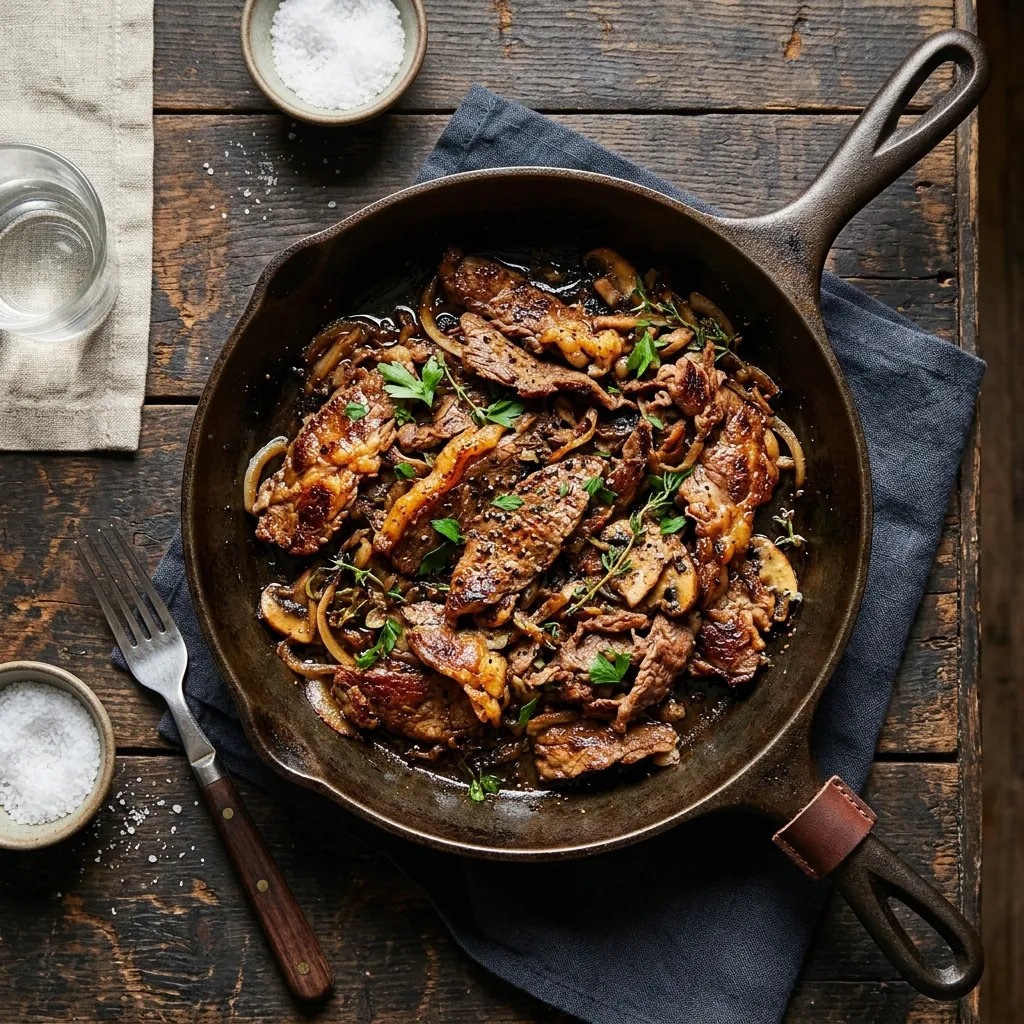
There are countless shaved steak recipes out there, but they all start with the same premise: very thin slices of beef cooked extremely quickly. Usually cut from the ribeye or sirloin, shaved steak is the foundation for classic cheesesteaks, quick stir-fries, and weeknight sandwiches. The problem is not finding a use for it. The problem is cooking it without turning it into a rubbery, grey mess.
Because the meat is sliced so thin, it has virtually no mass to hold heat. If your pan is not hot enough, the meat will drop the pan's temperature instantly. Instead of searing, the steak releases its water and boils in its own juices. You are left with steamed beef. Nobody wants steamed beef.
Ribeye is the traditional choice because its high fat content keeps it tender even when cooked rapidly to well-done. Sirloin is a leaner alternative that requires a bit more care. Both work, provided you control the heat.
When you master the technique of searing thin beef, you unlock a category of meals that go from the fridge to the plate in under fifteen minutes. The barrier is not the prep. The barrier is understanding exactly what happens when cold meat hits a hot pan.
The common mistake: steaming instead of searing
Most home cooks crowd the pan. They drop a pound of cold shaved steak into a lukewarm skillet. The pan temperature plummets. The meat releases water. Ten minutes later, you have grey meat sitting in a puddle of grey liquid.
The fix is straightforward. Work in batches. You want the meat to hit the pan, sizzle aggressively, brown on one side within 60 seconds, and come out of the pan. This requires serious heat and a pan that retains it. If you want to make a proper steak quesadilla, you need the steak to be crispy on the edges, not wet.
Water is the enemy of a good sear. Shaved steak packaged in a supermarket tray often sits in a small pool of its own juices. If you dump that liquid into the pan with the meat, you guarantee a boil instead of a sear. Patting the meat dry before cooking takes ten seconds and prevents disaster. Do not skip it.
There is no salvaging steamed beef. Once it has boiled in that pan liquid, it becomes chewy. You cannot simply cook it longer to brown it, because the thin slices will dry out completely before the water evaporates. You have to get the sear right on the first try.
The physics of thin meat and high heat
A thick steak, like a tomahawk or a large ribeye, gives you time. You can slowly raise the internal temperature while building a crust on the outside. (If you are interested in that process, see our reverse sear guide). Shaved steak gives you zero time.
The Maillard reaction—the chemical process that turns browned meat into flavorful meat—requires a surface temperature of around 300°F (150°C). Boiling water caps out at 212°F (100°C). As long as there is liquid water in your pan, the meat cannot exceed 212°F. It cannot brown. It can only steam.
With a thick steak, the surface moisture boils off, and eventually the surface temperature rises enough to brown the meat before the center overcooks. With shaved steak, by the time the surface moisture boils off, the center is completely cooked. This is why the pan must be incredibly hot, and the meat must be completely dry. You are trying to trigger the Maillard reaction in the 60-second window before the thin slice of meat dries out.
Sourcing: pre-sliced vs cutting it yourself
You can buy pre-shaved steak in the meat department of almost any grocery store. It is convenient, but it is often cut from lower-quality rounds or scraps. If you want the best possible result, buy a whole steak and slice it yourself.
To do this at home, you need to firm up the meat. Place the steak in the freezer for 30 to 45 minutes until it is stiff but not frozen solid. This prevents the meat from squishing under your knife, allowing you to slice it paper-thin. Serious Eats has a great breakdown of slicing against the grain. Always slice against the grain. If you slice with the grain, the resulting pieces will be unchewable strings.
For food safety and proper handling of thin cuts, the USDA guidelines on beef preparation are worth a quick read, though the thinness of this cut ensures it cooks through almost instantly. The risk with shaved steak is not undercooking it; the risk is completely ruining the texture by overcooking it.
Equipment matters: cast iron over everything
A $30 cast iron skillet, a $15 sheet pan, and a $10 instant-read thermometer will outperform $500 worth of specialty cookware. This is especially true for shaved steak. My first tomahawk steak was cooked on a cheap, thin stainless steel pan from a discount store. The steak did not sear — it steamed. I ate $70 worth of grey, sad meat. The next day I bought a cast iron skillet for $30 and have not used anything else for searing since.
Cast iron is heavy. It holds heat. When you drop cold meat into a cast iron pan, the temperature stays high. Let the pan preheat for 5 minutes on high before the meat goes anywhere near it. If the pan is not smoking slightly, it is not hot enough.
Non-stick pans are useless here. The Teflon coating degrades at the extreme temperatures required for a fast sear, and the thin aluminum construction drops in temperature the moment you add the cold meat. Carbon steel works if you have it, but cast iron remains the standard.
Gear that helps
- Lodge 12-Inch Cast Iron Skillet — $25-$40. Buy once. It will outlive you and it is the only way to properly sear shaved steak at home.
How to cook shaved steak properly
Start with dry meat. If your shaved steak is sitting in liquid in its packaging, pat it dry with paper towels. Next, season it. A simple sprinkle of kosher salt and black pepper is all you need. Do not marinate it. Marinades add liquid, and liquid causes steaming. Keep it dry.
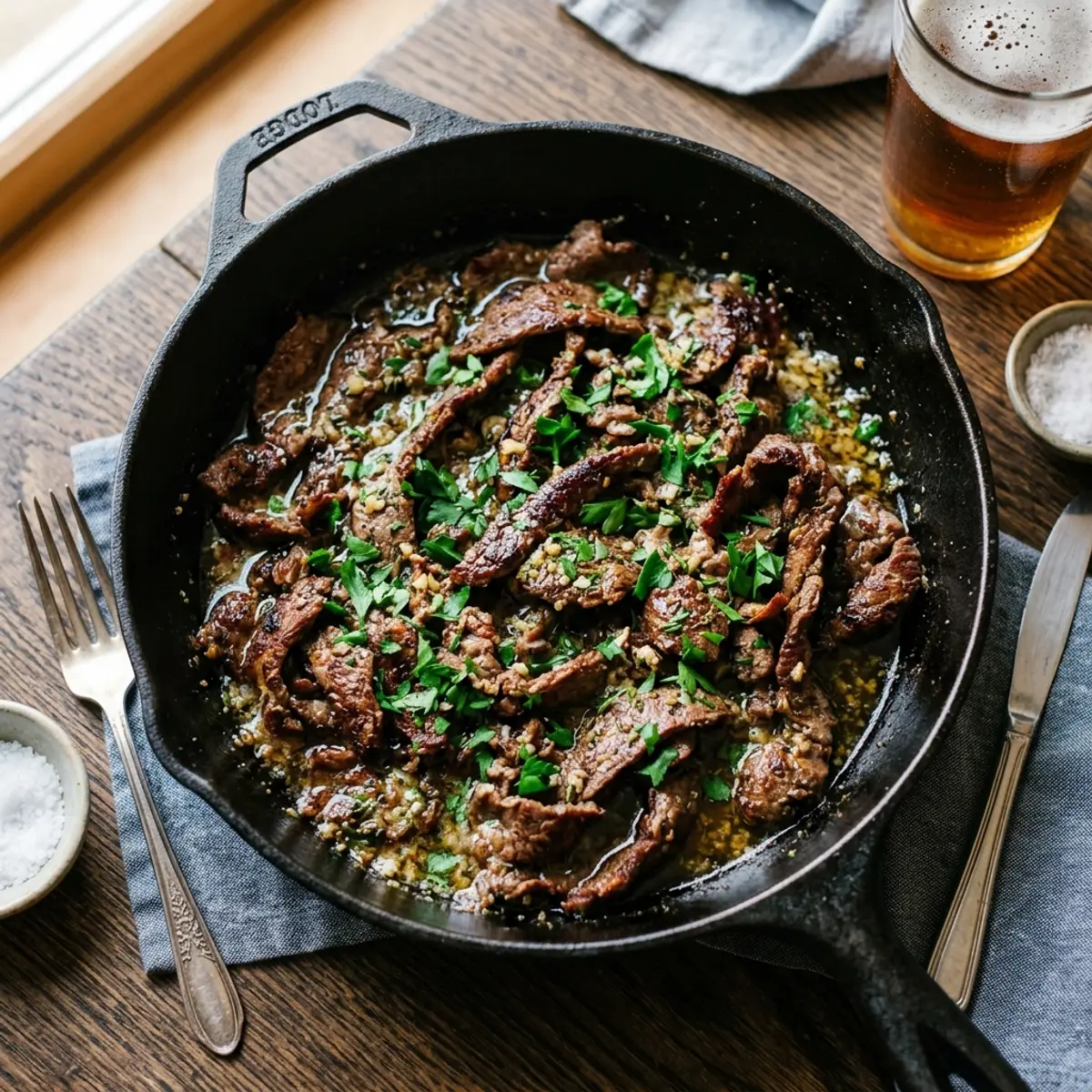
Get your cast iron skillet smoking hot. Add a high-smoke-point oil like avocado or canola. Olive oil will burn and turn bitter at these temperatures. Drop the steak in, spreading it out into an even layer. Work in batches. You should only cover about half the pan's surface area with meat at any one time.
Do not touch it for 60 seconds. Let it brown. Once you see crispy edges, use a stiff metal spatula to scrape it up, flip it, cook for 30 more seconds, and pull it off the heat immediately. That is the entire process. It is fast, but it requires your full attention. The line between browned and burnt is about 15 seconds wide here.
If you have a second batch, let the pan recover its heat for a minute before adding the rest of the meat. A cold pan guarantees a bad result.
What to make with shaved steak
Once you have a pile of perfectly browned shaved steak, you have options. The most obvious application is the classic Philly cheesesteak. Load the meat onto a toasted hoagie roll, top with provolone, and you are done.
For the exact step-by-step cooking process to keep by the stove, use our companion recipe card: 10-Minute Cast Iron Shaved Steak.
It works exceptionally well in tacos. You can toss it into a bowl of beef ramen at the last second. It is also an excellent base for shaved beef recipes if you are adapting a dish meant for standard ground beef or stir-fry cuts.
Store-bought broth is fine for a quick pan sauce. Your guests will not know the difference and you will have two extra hours of your life. Just deglaze the hot cast iron pan with a little beef broth, scrape up the browned bits, let it reduce for two minutes, and pour it over the meat.
The method is what matters. Get the pan hot, do not crowd the meat, and get it out fast. Everything else is just assembly.
A quick note on who this is for
If you are looking for someone to cater a 500-person corporate retreat or design a Michelin-star tasting menu, do not hire me. I cook for my family, not a banquet hall. My goal is to figure out how to put excellent food on a normal table without spending twelve hours doing it. This shaved steak method is exactly that: it is practical, it is fast, and it works every single time.
Frequently Asked Questions
What is the best cut of meat for shaved steak?
Ribeye is the gold standard because of its high fat content, which keeps it tender when sliced thin and cooked fast. Sirloin is a leaner, more affordable alternative that works almost as well if you do not overcook it.
Can I cook shaved steak from frozen?
Yes, but it is not ideal. Cooking from frozen drops the pan temperature significantly, increasing the chance of steaming instead of searing. If you must, cook it in much smaller batches to keep the pan hot.
How do I slice steak thin at home?
Place the steak in the freezer for 30 to 45 minutes until it is firm but not frozen solid. This makes it easy to slice paper-thin against the grain with a sharp chef's knife.
Why is my shaved steak tough?
It was either sliced with the grain instead of against it, or it was overcooked. Shaved steak needs less than two minutes total in a hot pan. Any longer and it dries out rapidly.
What can I substitute for shaved beef steak?
If you cannot find pre-shaved steak, buy a flank steak or skirt steak and slice it yourself against the grain. Ground beef is a completely different texture and does not work as a direct substitute in sandwiches.