Chicken Brine Recipe
A simple chicken brine that guarantees juicy, flavorful meat every time. Salt, sugar, water, and aromatics do all the heavy lifting overnight.

Why brine chicken
This chicken brine recipe uses a ratio of 1/4 cup kosher salt per 4 cups water to produce consistently juicy meat. The salt restructures the proteins so they hold onto water during cooking instead of squeezing it out. A whole chicken brined for 12-16 hours will retain noticeably more moisture than one cooked without.
Brining is not a marinade. Marinades sit on the surface and penetrate maybe 1-2mm into a chicken breast after 12-16 hours. A brine uses osmosis to pull seasoning into the entire piece of meat. Brining does what marinades promise but rarely deliver. If you want flavor throughout — not just on the outside — brine it. Marinades add surface flavor, and for grilling that might be enough. But for a whole roasted chicken, the brine is the move.
I once left a chicken in brine for 36 hours because I forgot about it. The result tasted like chewing on a bouillon cube wrapped in chicken skin. That is why every brine recipe here includes a maximum time: 24 hours, no exceptions.
How brining works
Salt dissolved in water creates a solution with a higher salt concentration than the liquid inside the chicken's muscle fibers. Osmosis drives the brine into the meat, and the salt denatures the proteins so they form a looser network. That looser network holds more water during cooking. The food science behind brining is well documented — this is not opinion, it is physics.
Sugar in the brine balances the salt and encourages browning on the skin. The aromatics — peppercorns, bay leaves, garlic — add subtle background flavor. They are not required, but they round out the finished bird.
Brine timing
Not all cuts need the same time. Here is what I have tested:
- Bone-in thighs or drumsticks: 4-8 hours
- Bone-in breasts: 4-6 hours
- Whole chicken (4-5 lbs): 12-16 hours (optimal)
- Boneless breasts: 1-2 hours only — they absorb salt faster
The minimum effective brine time for bone-in chicken is 4 hours. Anything less and you will not taste a meaningful difference. The maximum before texture degrades is 24 hours. Past that point, the meat turns mushy and overly salty.
Gear that helps
Gear that helps
- Diamond Crystal Kosher Salt (3 lb box) — $4-$5. The flake size makes it easy to measure and pinch. Morton's works too, but reduce the amount by about 25% since the crystals are denser.
- Instant-read thermometer — $10-$15. The only way to know your chicken is done without cutting into it. Every recipe on this site includes a target internal temperature for a reason.
- Cambro food storage container (6 qt) — $12-$18. Fits a whole chicken, seals tightly, and goes straight into the fridge. A large zip-top bag works in a pinch, but these are easier to manage.
After the brine
Once the brine is done, the chicken needs to dry. Pat it down with paper towels and set it on a wire rack in the fridge, uncovered, for at least an hour. Wet skin steams instead of crisps. If you have the time, leave it uncovered overnight — the skin will be noticeably crispier after roasting.
Do not add extra salt to a brined chicken before cooking. The salt is already inside the meat. Season with pepper, herbs, or a light rub, but skip the salt.
More chicken recipes
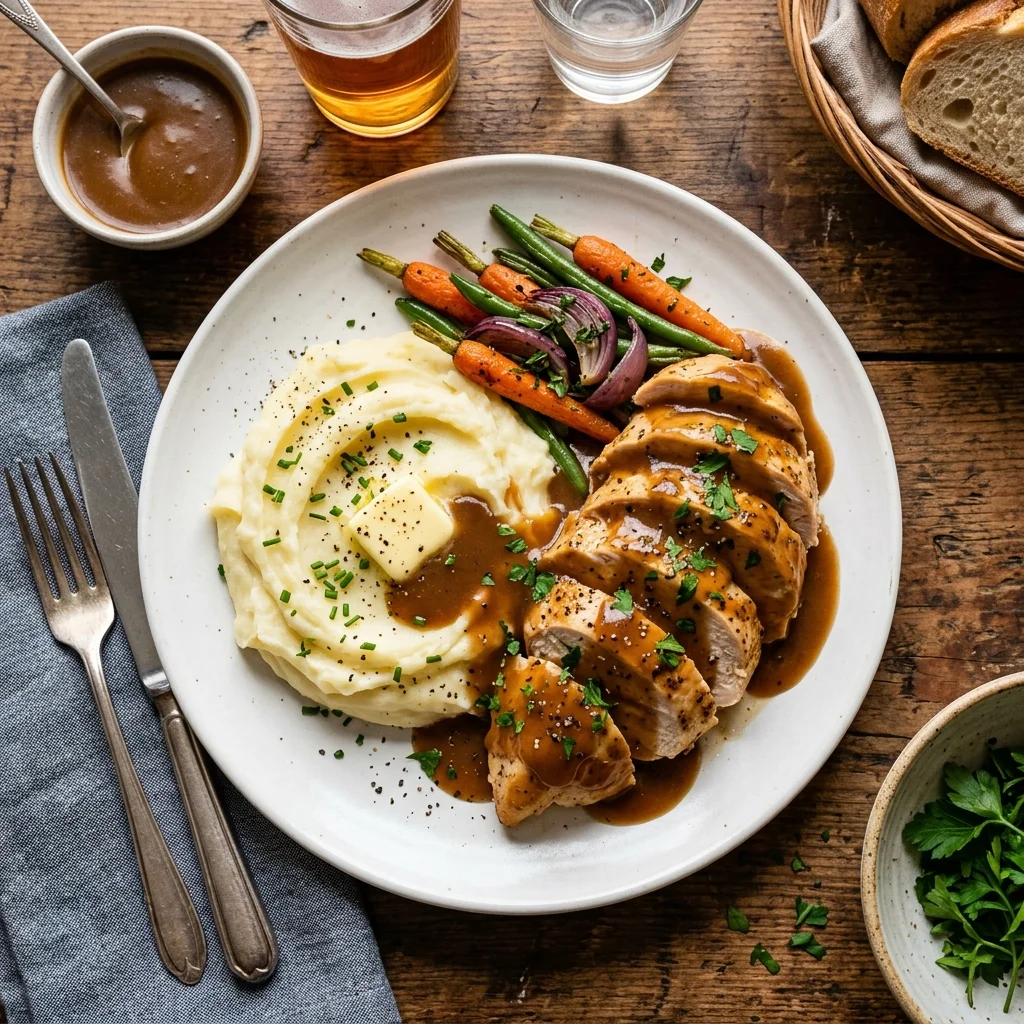
A brined chicken makes a great base for chicken and gravy — the extra moisture keeps the meat tender even under a heavy pan sauce. If you are working with thinner cuts, check out these thin sliced chicken breast recipes for fast weeknight options. For a deeper look at brining technique, including turkey and pork chops, read the full guide to brining chicken.
The same osmosis principle that makes chicken brine work also applies to fish. I use a similar approach for smoked salmon, though the timing and salt concentration are different. The USDA guidelines for chicken safety recommend an internal temperature of 165°F, which is what I use for every chicken recipe here.
Chicken Brine Recipe
Ingredients
- 4 cups cold water
- 1/4 cup kosher salt (Diamond Crystal or Morton's)
- 2 tablespoons granulated sugar
- 1 tablespoon whole black peppercorns
- 3 bay leaves
- 4 cloves garlic, smashed
- 4 cups ice water
- 1 whole chicken (4-5 lbs), giblets removed
Instructions
- Combine 4 cups of water, 1/4 cup kosher salt, and 2 tablespoons sugar in a saucepan over medium heat. Stir until the salt and sugar dissolve completely, about 2 minutes.
- Add the peppercorns, bay leaves, and smashed garlic to the warm brine. Remove from heat and let steep for 10 minutes.
- Pour 4 cups of ice water into a brining container or large pot. Add the warm brine and stir to combine. The mixture should be cool to the touch before adding the chicken.
- Submerge the whole chicken in the brine. If needed, place a plate on top to keep it fully submerged.
- Cover and refrigerate for 12-16 hours. Do not exceed 24 hours or the texture will degrade.
- Remove the chicken from the brine and pat it completely dry with paper towels. Discard the brine.
- Let the chicken sit uncovered on a wire rack in the refrigerator for 1 hour before cooking. This dries the skin and promotes browning.
- Cook the chicken using your preferred method. Roast at 425°F until the thickest part of the thigh reads 165°F on an instant-read thermometer, about 50-60 minutes for a 4-5 lb bird.
Tips
- The ratio is 1/4 cup kosher salt per 4 cups water. Scale up or down as needed, but keep the ratio exact.
- Bone-in chicken needs a minimum of 4 hours in the brine to see a real difference. Whole birds benefit from 12-16 hours.
- Never brine a chicken that has already been injected with a salt solution. Check the label — if sodium is listed in the ingredients, skip the brine.
- Pat the chicken completely dry after brining. Wet skin does not brown.
- A $4-$5 box of kosher salt lasts months and is the only salt you should measure by volume. Table salt and kosher salt are not interchangeable by measurement.
Frequently Asked Questions
How long should you brine a whole chicken?
Brine a whole chicken for 12-16 hours in the refrigerator. The minimum effective time is 4 hours for bone-in pieces. Do not exceed 24 hours — the texture starts to break down and the meat becomes overly salty.
Can you brine chicken too long?
Yes. Past 24 hours, the salt concentration makes the meat mushy and unpleasantly salty. I have tested this firsthand with a 36-hour brine that was inedible. Stick to the 12-16 hour window for a whole bird.
What is the ratio of salt to water for chicken brine?
Use 1/4 cup kosher salt per 4 cups of water. This ratio works for any cut. If you are using table salt instead of kosher salt, reduce the amount by half — kosher salt flakes are much larger by volume.
Should you rinse chicken after brining?
Rinsing is not necessary if you used the correct salt ratio. Pat the chicken dry with paper towels instead. Rinsing can splash bacteria around the sink, and the USDA advises against it.
Can you use table salt instead of kosher salt for brine?
You can, but you need to adjust the measurement. 1 tablespoon of Diamond Crystal kosher salt equals roughly 1.5 teaspoons of table salt. Kosher salt is easier to measure and control, and a 3 lb box costs $4-$5.
Do you need sugar in a chicken brine?
Sugar is optional but recommended. It balances the salt flavor and promotes better browning on the skin during roasting. Two tablespoons per batch is enough — you are not making a sweet brine, just rounding out the salt.