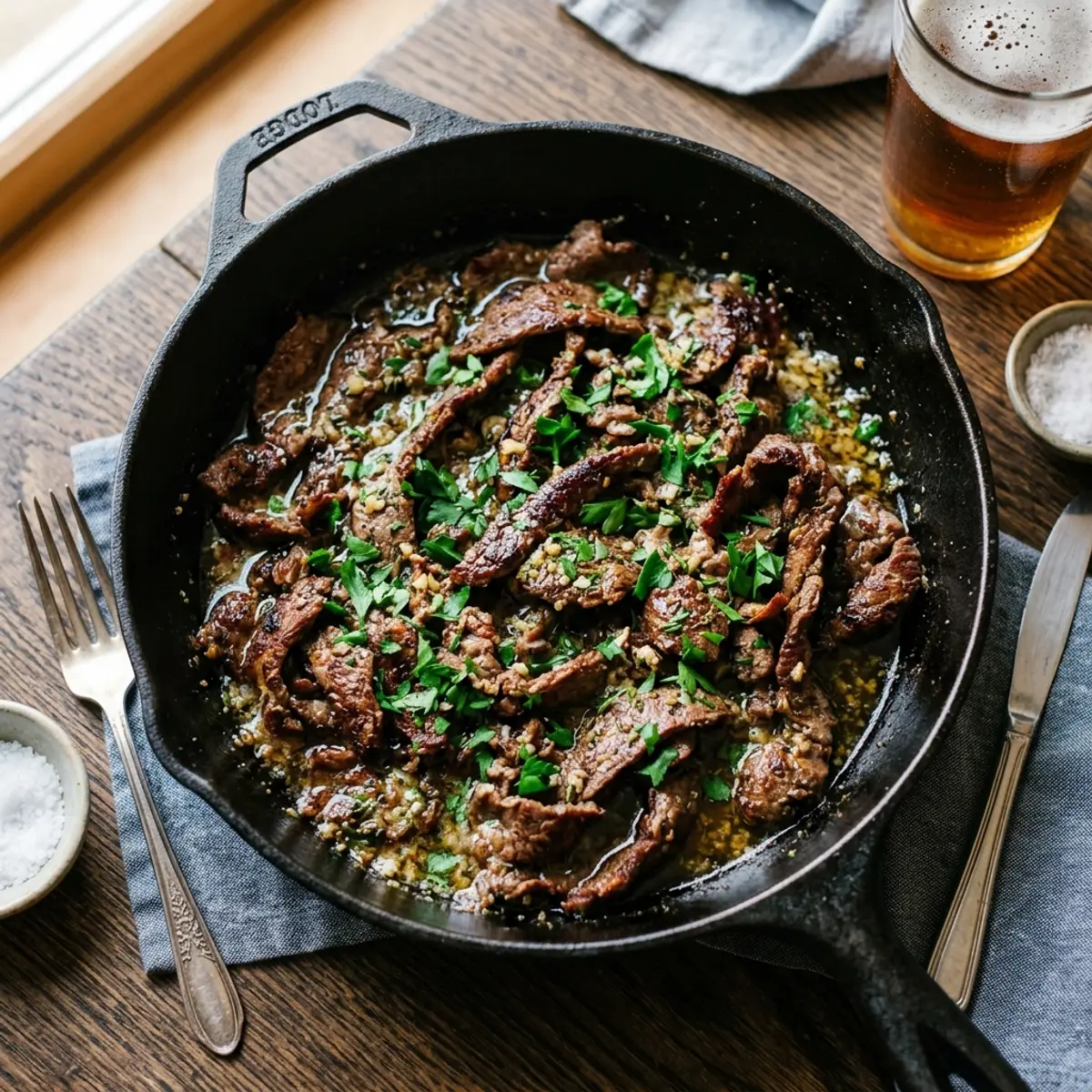
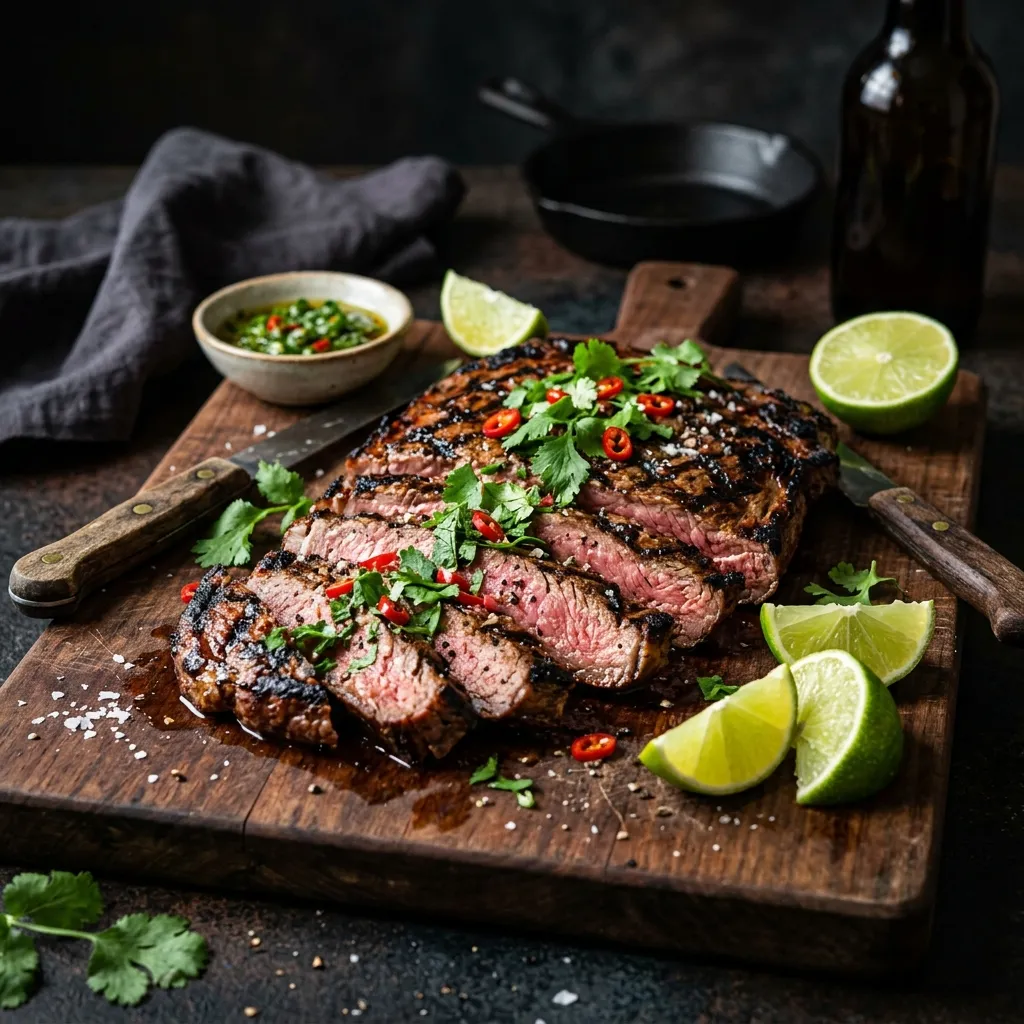
10-Minute Cast Iron Shaved Steak
The definitive method for cooking shaved steak without steaming it. High heat, cast iron, and working in batches yields crispy edges and tender meat in minutes.
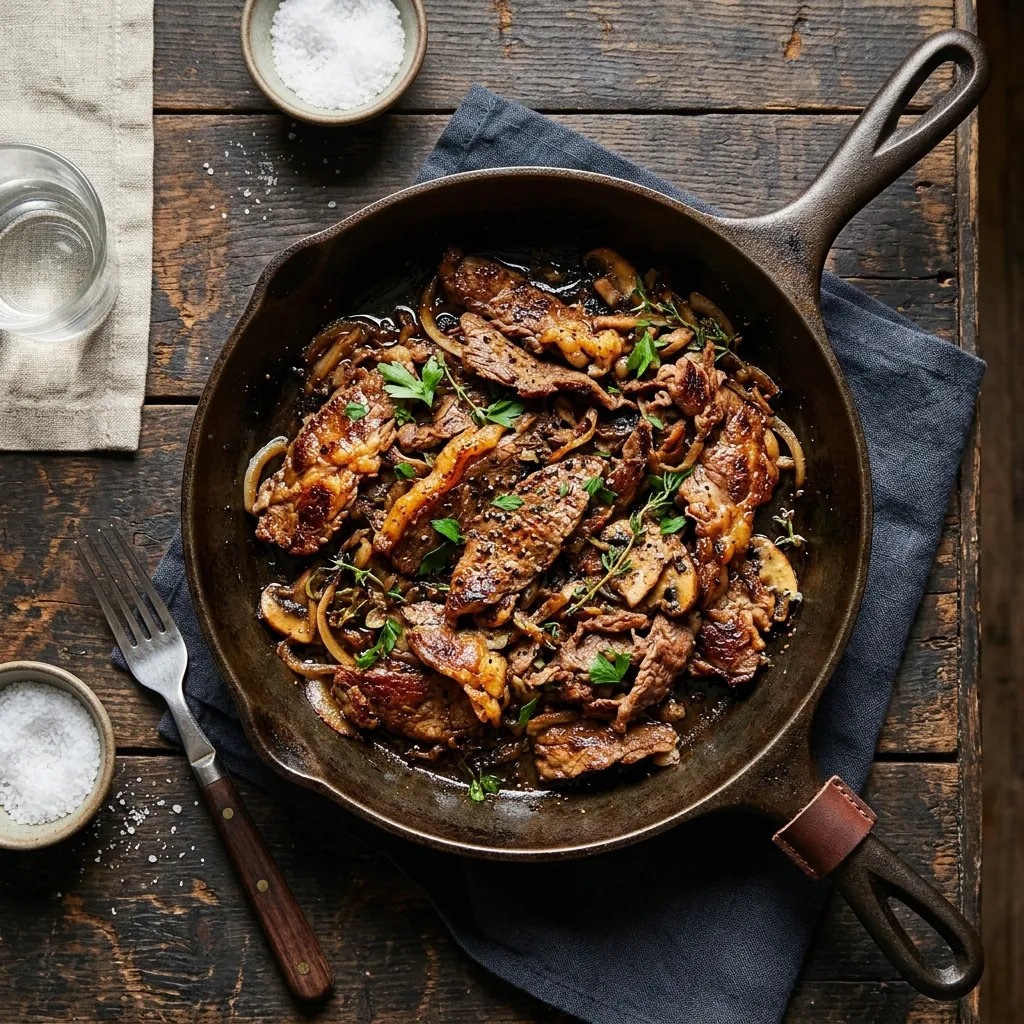
The technique for perfect shaved steak
Cooking shaved steak is an exercise in heat management. The meat is so thin that it cooks through almost instantly. The goal is to get a deep, flavorful sear on the outside before the inside dries out. That is why we use a heavy cast iron skillet heated for 5 minutes on high. A thin non-stick pan will lose its heat the second the meat touches it, resulting in boiled, grey beef.
For the full breakdown on why cast iron matters here, and how to avoid the common steaming mistake, read the companion guide: Shaved Steak Recipes: The 10-Minute Skillet Method. If you want to use this meat in other dishes, it works perfectly wrapped up in a steak quesadilla or piled onto a toasted roll for a quick weeknight dinner.
Why simple seasoning works
You do not need a complex marinade for this. Because the meat is shaved, there is an enormous amount of surface area for seasoning to stick to. A simple rub of kosher salt and black pepper, applied right before cooking, is all it needs. Marinades add unnecessary liquid that inhibits browning. If you want to add soy sauce or a quick pan sauce, do it after the meat is already browned and resting on a plate, similar to the technique used in our shaved beef recipe.
Gear that helps
- Lodge 12-Inch Cast Iron Skillet — $25-$40. It holds the high heat required to sear thin meat in 60 seconds without dropping temperature.
- Heavy Duty Tongs — $15. Essential for quickly flipping large amounts of thin steak before it overcooks.
10-Minute Cast Iron Shaved Steak
Ingredients
- 1.5 lbs shaved beef steak (ribeye or sirloin)
- 1 tbsp avocado oil or canola oil
- 1 tsp kosher salt (Diamond Crystal or Morton's)
- 1/2 tsp freshly ground black pepper
- 1 tbsp unsalted butter (optional, for finishing)
Instructions
- Place a large cast iron skillet on the stove and preheat it on high for 5 minutes. The pan needs to be smoking hot.
- While the pan heats, pat the shaved steak completely dry with paper towels. Moisture is the enemy of a good sear.
- Season the steak evenly with the kosher salt and black pepper just before cooking.
- Add the oil to the hot skillet. Working in two batches so you do not crowd the pan, drop half the steak into the skillet and spread it into a single layer.
- Do not touch the meat for 60 seconds. Let it develop a deeply browned crust on the bottom.
- Using tongs or a stiff spatula, flip the meat and cook for another 30 to 45 seconds until no longer pink. Remove the meat immediately to a plate.
- Repeat with the second batch. If using, toss the butter into the hot pan at the very end to melt, then pour it over the cooked steak.
Tips
- Do not skip drying the meat. Shaved steak in a package often sits in liquid, which will instantly steam the beef if not removed.
- Cook in batches. Dropping 1.5 lbs of meat into any pan at once will drop the temperature too fast to sear.
- Prep everything before you start. The cooking process takes less than three minutes per batch. You will not have time to chop onions while the meat is in the pan.
Frequently Asked Questions
How do I prevent shaved steak from getting chewy?
Shaved steak gets chewy when it boils in its own juices instead of searing. Dry the meat thoroughly, use a smoking hot cast iron pan, and do not crowd the skillet. Cook it fast.
Do I need to add oil to the pan?
Yes, even if you are using a fatty cut like ribeye. A small amount of high-smoke-point oil like avocado oil helps conduct the heat evenly across the uneven surface of the shaved meat.
Can I use butter to cook shaved steak?
Butter burns at the high temperatures required for searing shaved steak. Use avocado or canola oil to cook, and toss a tablespoon of butter in right at the end for flavor if desired.
How long does cooked shaved steak last in the fridge?
It will keep in an airtight container for 3 to 4 days. Reheat it quickly in a hot pan or the microwave, but be aware it will not be as tender as when it was freshly cooked.