Salmon and Rice Recipe
A clean, balanced meal in under 30 minutes. Pan-seared salmon over fluffy rice with steamed vegetables and a soy-ginger drizzle.
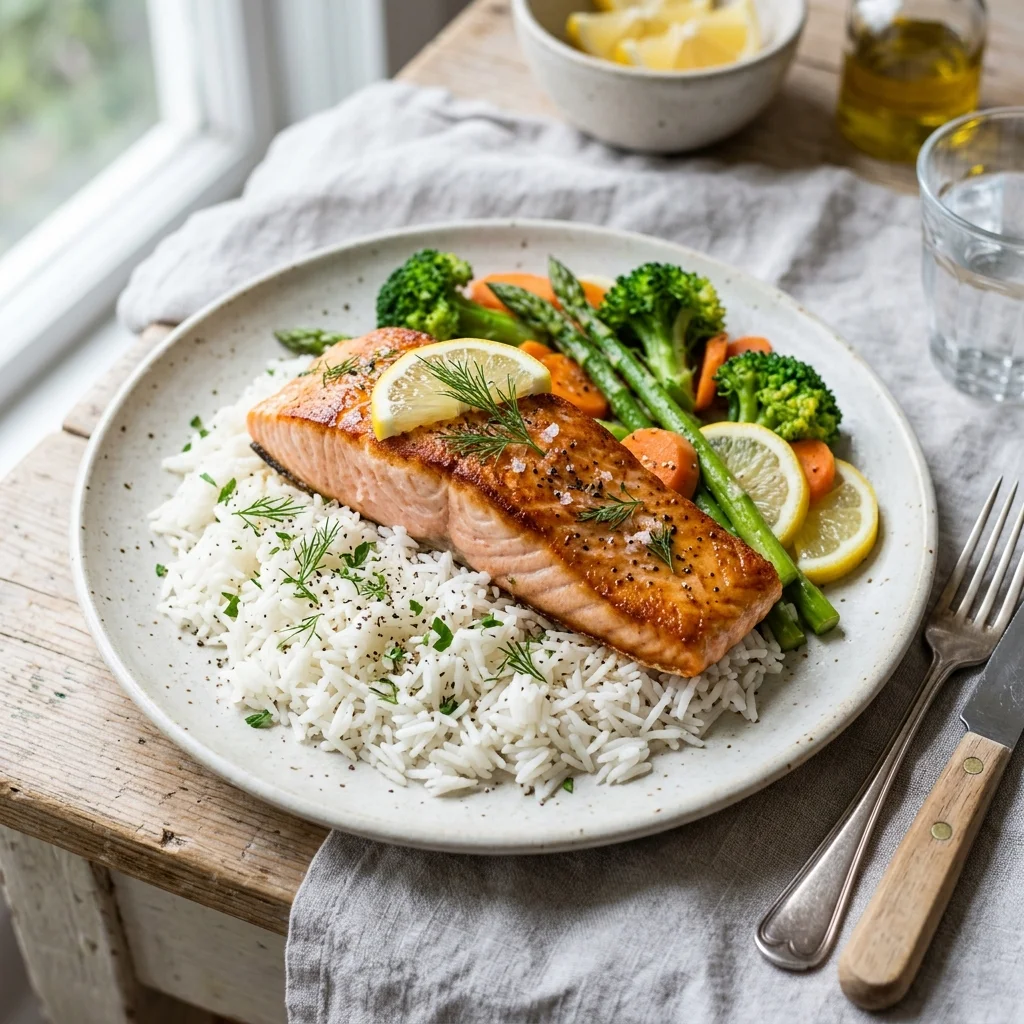
A 30-minute salmon and rice recipe
This salmon and rice recipe puts a complete meal on the table in 30 minutes. Pan-sear two 6 oz salmon fillets to 125°F, cook jasmine rice on the stovetop, steam broccoli, and tie everything together with a soy-ginger drizzle. The timing works because all three components cook simultaneously — start the rice, then the salmon, then the broccoli during the last few minutes.
The soy-ginger drizzle is what makes this more than the sum of its parts. Five ingredients, no cooking required, and it pulls the whole plate together. It is the difference between "I made salmon and rice" and an actual meal.
How to cook rice on the stovetop
Rinse the rice under cold water until the water runs clear. This removes excess starch that makes rice gummy. Combine 1 cup of rice with 2 cups of water, bring it to a boil, then drop the heat to the lowest setting and cover. Set a timer for 15 minutes and do not lift the lid. The steam does the work.
After 15 minutes, kill the heat and let it sit covered for another 5 minutes if you have the time. Then fluff with a fork. If you own a rice cooker, use it — it is more consistent and frees up a burner. Either method produces the same result.
Pan-searing salmon with crispy skin
The trick to crispy salmon skin is dry fish and a hot pan. Pat the fillets dry with paper towels — both sides. Season with salt and pepper. Heat olive oil in a skillet over medium-high for 2 minutes before the fish goes in.
Start the salmon flesh-side down for 4 minutes. Do not move it, do not peek. When you flip, the crust should be deep golden. Finish skin-side down for another 3-4 minutes. The skin crisps up in direct contact with the hot pan. Pull at 125°F internal temperature for a moist center.
If the skin sticks, the pan was not hot enough or the fish was not dry enough. Both problems are solved before the fish touches the pan, not during cooking.
The soy-ginger drizzle
Whisk together 2 tablespoons soy sauce, 1 teaspoon sesame oil, 1 teaspoon rice vinegar, grated fresh ginger, and minced garlic. No heat needed. The raw ginger gives it a sharp bite that cuts through the richness of the salmon and the starchiness of the rice.
Make a double batch. It keeps in the fridge for up to a week and works on everything — salmon bites, grilled chicken, or tossed with noodles. This is the same flavor profile I use in the beef ramen recipe, scaled down to a drizzle instead of a broth.
Gear that helps
- Rice cooker (6-cup capacity) — $25-$35. Makes rice foolproof and frees up a burner for the salmon. Set it and forget it.
- Lodge 12-inch cast iron skillet — $25-$40. Holds steady heat for an even sear. A non-stick pan works too, but cast iron gives you a better crust.
- Instant-read thermometer — $10-$15. The only way to nail 125°F consistently. Guessing by time alone leads to overcooked salmon more often than not.
Making it your own
Swap broccoli for asparagus, snap peas, or bok choy. The steaming time stays about the same for any of these. Add a fried egg on top for extra protein if you are using this as a post-workout meal.
For a smokier version, use leftover flaked salmon from the smoked salmon recipe instead of pan-searing fresh fillets. The soy-ginger drizzle works just as well with smoked fish. The weeknight salmon rice bowls post covers more variations and meal prep strategies if you want to batch this for the week.
Salmon temperatures and food safety
The USDA recommends cooking salmon to 145°F. I pull at 125°F because the texture is noticeably better — moist and barely flaking versus dry and chalky. This is a personal call. If you are cooking for anyone immunocompromised, stick with 145°F.
The Serious Eats pan-seared salmon guide explains the protein science behind why salmon texture changes so dramatically between 120°F and 150°F. It is worth reading if you want to understand the "why" behind the target temperature. The Cook's Illustrated test kitchen has also published extensive testing on stovetop rice methods if you want to refine that part of the process.
Salmon and Rice Recipe
Ingredients
- 2 salmon fillets, 6 oz each, skin-on
- 1 cup jasmine or long-grain rice
- 2 cups water (for rice)
- 1 tablespoon olive oil
- 1 teaspoon kosher salt, divided
- 1/2 teaspoon black pepper
- 2 cups broccoli florets
- For the soy-ginger drizzle:
- 2 tablespoons soy sauce
- 1 teaspoon sesame oil
- 1 teaspoon rice vinegar
- 1 teaspoon fresh ginger, grated
- 1 clove garlic, minced
- 1 teaspoon sesame seeds
- 1 green onion, thinly sliced
Instructions
- Rinse 1 cup of jasmine rice under cold water until the water runs clear, about 30 seconds.
- Combine the rice and 2 cups of water in a saucepan, bring to a boil, then reduce heat to low, cover, and cook for 15 minutes without lifting the lid.
- While the rice cooks, pat the salmon fillets dry with paper towels and season both sides with 1/2 teaspoon kosher salt and black pepper.
- Heat 1 tablespoon olive oil in a cast iron or non-stick skillet over medium-high heat for 2 minutes.
- Place the salmon skin-side up in the skillet and sear for 4 minutes without moving until a golden crust forms.
- Flip the fillets to skin-side down and cook for another 3-4 minutes until the skin is crispy and the internal temperature reaches 125°F.
- While the salmon finishes, steam the broccoli florets in a covered pot with 1 inch of water for 3-4 minutes until tender-crisp, then season with remaining 1/2 teaspoon kosher salt.
- Whisk together soy sauce, sesame oil, rice vinegar, grated ginger, and minced garlic in a small bowl.
- Fluff the rice with a fork and divide between two plates.
- Place a salmon fillet on each bed of rice, add the broccoli alongside, and spoon the soy-ginger drizzle over everything.
- Garnish with sesame seeds and sliced green onion.
Tips
- Start the rice first. It takes 15 minutes and needs no attention once covered. The salmon and broccoli cook while you wait.
- Press the salmon flesh-side down into the hot pan and do not move it for 4 full minutes. Lifting it early breaks the crust.
- Grate the ginger on a microplane. A knife leaves chunks that overpower individual bites. A microplane turns it into a paste that distributes evenly through the drizzle.
- Pull the salmon at 125°F. The residual heat carries it up another 5-10 degrees while you plate everything.
- Wild-caught salmon at $10-$14/lb has better flavor than farmed ($8-$10/lb) for this recipe, but both work.
Frequently Asked Questions
What kind of rice goes best with salmon?
Jasmine rice is the best match — its subtle floral aroma complements the soy-ginger drizzle. Long-grain white rice is a neutral alternative. Avoid sticky or short-grain rice unless you are building a sushi-style bowl.
How long does it take to cook salmon and rice?
About 30 minutes total. Start the rice first (15 minutes covered, no attention needed), then sear the salmon (7-8 minutes) and steam the broccoli (3-4 minutes) while the rice finishes. Everything comes together at the same time.
Can you use frozen salmon for this recipe?
Yes. Thaw the fillets in the fridge overnight and pat them completely dry before searing. Frozen wild-caught salmon at $10-$14/lb works just as well as fresh. Do not try to sear salmon from frozen — the exterior burns before the center thaws.
What temperature should salmon be for salmon and rice?
Pull the salmon at 125°F for a moist, slightly translucent center. The USDA recommends 145°F for fully cooked fish. An instant-read thermometer is the only reliable way to check — do not cut into the fillet to look.
How do you make salmon skin crispy?
Three things: dry the skin thoroughly with paper towels, heat the pan with oil for 2 minutes before the fish goes in, and cook skin-side down for 3-4 minutes without moving it. The skin will release from the pan on its own once it is crispy.
What vegetables go with salmon and rice?
Broccoli, asparagus, snap peas, bok choy, and green beans all work. Steam or sauté them for 3-4 minutes until tender-crisp. Avoid anything with a strong competing flavor — the soy-ginger drizzle is the main seasoning for the plate.